The scene: A picturesque Greek island, a turquoise evening sky, and Cher. Across a sparkling villa she spots a man that once stole her heart, prompting a rush of sweet memories. The music begins and she sings: “Can you hear the drums Fernando.”
That’s the most memorable moment from Mamma Mia! Here We Go Again, the sequel to 2008’s Mamma Mia!, the film version of the stage musical celebrating all things ABBA.
Cher, naturally, steals the movie with that one performance. Think about that for a minute. Superstar Cher, one of the most iconic, distinctive voices in popular music, is singing ABBA. For those following the amazing, downright magical endurance of ABBA’s music, this is clearly the shimmering feather in an already sequined cap.
The stats speak for themselves. Since the 1992 release of Gold: Greatest Hits, the 19-track compilation CD gathering most of ABBA’s memorable radio anthems, the band’s resurgence has been steady, healthy, and quite lucrative. What’s most remarkable is Gold not only came out more than a decade after ABBA called it quits, but it didn’t usher in a reunion tour, or a new album, or a tell-all book. Nothing. And yet, Gold has sold 6 million copies in the United States alone.
But there’s more. Mamma Mia!, which made its stage debut in 1999 in London, enjoyed a 14-year run on New York’s famed Broadway with 5,758 performances. The Mamma Mia! film grossed $144 million at the US box office. Mamma Mia! Here We Go Again, released barely a month ago, has so far taken in $91.8 million in the United States.
Numbers don’t lie. The music of Anni-Frid Lyngstad, Björn Ulvaeus, Benny Andersson and Agnetha Fältskog continues to enthrall the generation that first experienced it as well as generations since.
Benny and Björn, the songwriting masterminds behind the ABBA canon, created pop music masterpieces. They took layered melodies, quirky yet clever lyrics, and then dressed them up in an engulfing wall of sound. In the space of four minutes, beautifully adorned by the harmonious vocals of Agnetha and Frida, an ABBA song became your transportation capsule to another realm. You were swept away…willingly.
My life partner Steve, who like me experienced the ABBA ascension as it was originally happening, still listens to ABBA today. “ABBA’s music fills me with youthful exuberance and joy,” he says.
My co-worker Hannah is technically too young to know ABBA. When the band was enjoying Top 40 hits Hannah was barely a figment of her parents’ imaginations. But an adolescent Hannah was introduced to the ABBA greatness through the A-Teens, a now-defunct Swedish teen group formed in 1998 specifically as a young ABBA tribute band.
Hannah then caught Mamma Mia! fever and that was it. She was hooked. “ABBA makes me feel happy, like all the stresses of life fall away and I can just live in the moment,” she says.
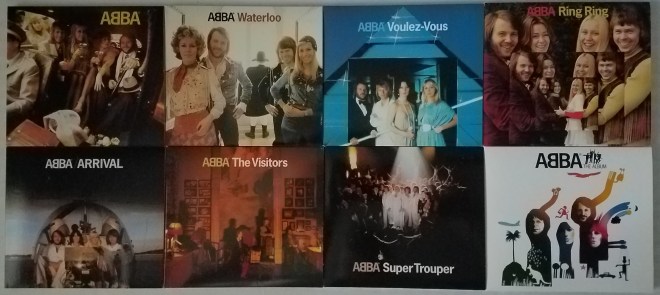
That, my friends, is the power of enduring music that travels across generations. Throughout eight albums, ABBA left a song legacy neither dated nor demographical. “Dancing Queen,” recorded in 1975 and released in 1976, is pop perfection. It’s an audible invitation to get up, grab a friend, and sing your heart out.
Even when ABBA moved into more textured melodies and personal lyrics, particularly during the final two albums, 1980’s Super Trouper and 1981’s The Visitors, the message was still universal. Listen to “Lay All Your Love on Me,” “The Winner Takes It All” and “When All Is Said and Done,” three stunning examples of foreboding lyrics married with exuberant, beautiful soundscapes.
ABBA left us all wanting more. As word continues to circulate that the four band members are recording two new songs and making some public appearances, there is still no firm talk about a reunion.
ABBA doesn’t really need to reunite. They created music that continues to captivate audiences old enough to remember and young enough to discover.
 Mario's Musings